STATE WATCH
Four States. Six Bills. One Constitutional Question.
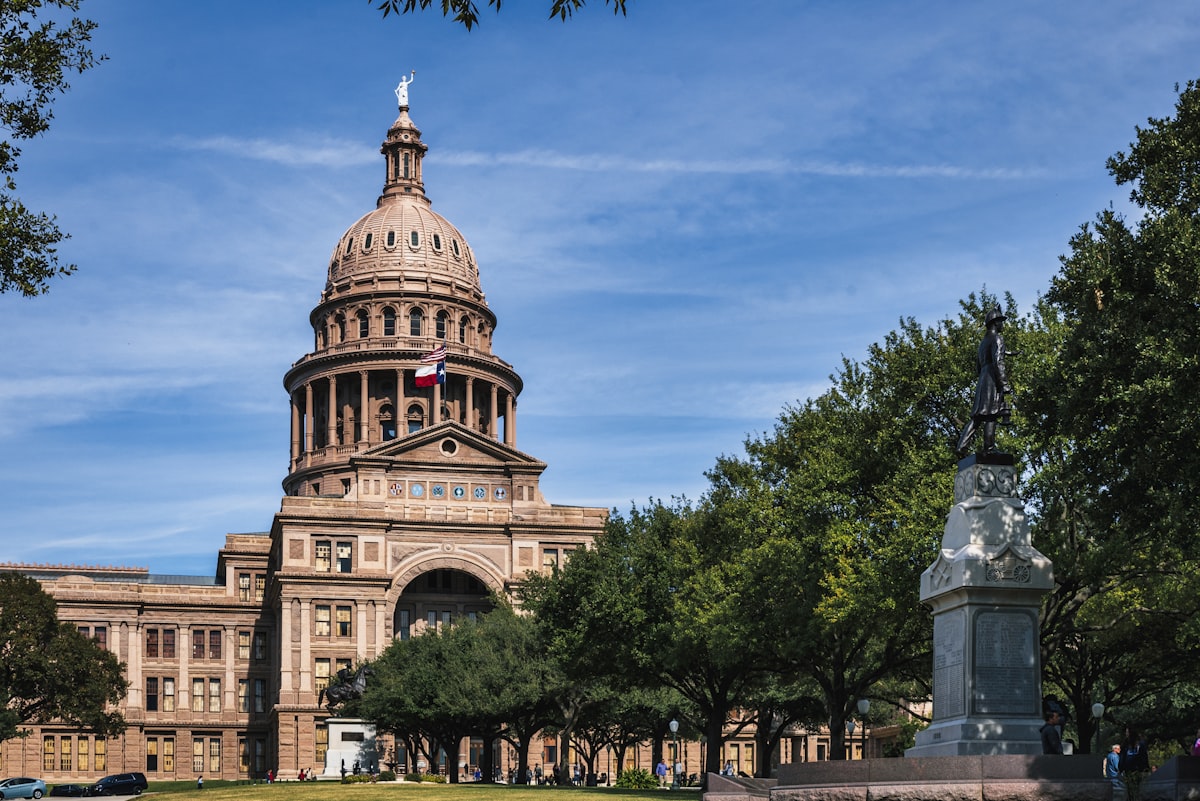
Tennessee is advancing the most aggressive church-state legislative agenda in the country this session. SB 2318, which passed the Senate 25-5 and cleared the House Education Committee in early April, would allow religiously affiliated postsecondary institutions to operate publicly funded charter schools — challenging the longstanding consensus that charter schools are government entities subject to Establishment Clause constraints. AG Jonathan Skrmetti issued an opinion in November 2025 that the ban "likely" violates the Free Exercise Clause, providing political cover for passage. Separately, bills mandating Ten Commandments displays alongside the Constitution and Bill of Rights passed both chambers; a parallel religious expression bill (SB 1714) shields students from academic penalty for religious viewpoints on assignments. Both measures are headed for federal court, establishing Tennessee as a primary test jurisdiction for the post-Kennedy v. Bremerton framework.
HB 3283 — Oklahoma's civil forfeiture reform bill — would raise the evidentiary burden required before law enforcement can permanently seize property from owners who have not been convicted of a crime. According to the Institute for Justice's "Policing for Profit" tracking database, Oklahoma joins a wave of at least 37 states that have enacted some form of forfeiture reform since 2014; 16 states now require a criminal conviction before property can be permanently forfeited. The bill also advances alongside separate parole reform measures, suggesting a broader criminal justice reform coalition forming in the legislature. Oklahoma's forfeiture regime has historically allowed agencies to retain proceeds — a financial incentive critics argue corrupts enforcement priorities. Passage would mark a significant due process win for property rights advocates.
The nation's largest school voucher program — Texas Education Freedom Accounts (TEFA), established by Texas Senate Bill 2 (2023 Special Session) and funded at $1 billion — faces a critical federal court hearing on April 24 on a permanent injunction. At issue is whether Texas may use an administrative review process to selectively exclude religious institutions from a publicly funded program. A U.S. District Court judge issued a temporary restraining order in March, finding it "troubling" that the program initially approved over 2,200 private schools of various faiths while leaving others in indefinite limbo without explanation. The April 24 hearing will determine whether that administrative gatekeeping constitutes unconstitutional viewpoint discrimination — a ruling with implications far beyond Texas. Attorney General Paxton's separate investigation into a Dallas-based private religious mediation group, announced April 6, adds another front: the question of whether the state may apply unique scrutiny to voluntary religious arbitration that it does not apply to equivalent Jewish or Christian arbitration bodies. Separately, the May 2026 Comptroller primary produced Don Huffines as the Republican nominee, defeating Governor Abbott's preferred candidate; Huffines will set the administrative posture of TEFA if elected in November.
HJR 583 / SJR 1104 proposes a constitutional amendment protecting religious expression in Florida public schools. If the legislature passes it and 60% of voters approve in November, the measure would shield students from academic penalty for religious viewpoints and protect religious club formation on campus — facially neutral across all faiths. The accountability question is whether implementation will be applied evenhandedly. Florida schools are separately managing competing directives on student protest rights and immigration enforcement near campuses, creating ongoing constitutional friction.
Minnesota's civil forfeiture reform bill raises the standard of proof required before permanent seizure, eliminates the federal "equitable sharing" loophole agencies use to circumvent state restrictions, and mandates transparent reporting of forfeiture revenue use by municipalities. The bill has bipartisan support and a broad reform coalition behind it. If passed, it would make Minnesota one of the strongest property-rights protection states in the country.
HB 1238 would prohibit Georgia courts from applying rulings based on any foreign legal code — but its operational target is religious arbitration, a First Amendment-protected practice used by Jewish Beth Din courts, Christian arbitration services, and other religious communities alike. Bills that facially restrict "foreign law" but are drafted to target specific faiths face Equal Protection challenges. Georgia is one of four states advancing ALAC-model legislation this session, alongside Oklahoma, New Hampshire, and Texas.
Tennessee's SB 2318 — allowing religiously affiliated institutions to operate publicly funded charter schools — may be the most consequential First Amendment test of the year. The core legal question: is a charter school a government entity bound by the Establishment Clause, or a private contractor with First Amendment free exercise rights? The answer has been assumed for decades. Espinoza v. Montana (2020) held states cannot exclude religious schools from neutral aid programs; Carson v. Makin (2022) held states cannot impose "nonsectarian" conditions on vouchers. The Tennessee AG's opinion tracks those precedents. If SB 2318 passes and survives initial challenge, it will accelerate cases toward a Supreme Court that has consistently expanded accommodation of religion in public funding — reshaping church-state doctrine for faith-based institutions in every state.
| Date | State | Event |
|---|---|---|
| April 24, 2026 | Texas | Federal court permanent injunction hearing — TEFA school choice program |
| April/May 2026 | Tennessee | Final House vote on SB 2318 (religious charter schools) |
| May/June 2026 | Tennessee | Legislative session end — Ten Commandments bill and SB 1714 final disposition |
| May/June 2026 | Oklahoma | HB 3283 civil forfeiture reform — Senate vote pending |
| November 2026 | Texas | Comptroller general election (Don Huffines R vs. Sarah Eckhardt D) |
| November 2026 | Florida | HJR 583 ballot measure — religious expression in schools (if legislature passes) |
| January 2027 | Texas | New Comptroller takes office — sets TEFA administrative posture for year two |
| Ongoing | Federal | SCOTUS Catholic Charities ruling — state-level ripple cases across Michigan, Wisconsin, and others |