POLICY BRIEF
Who Speaks for Religious Liberty? The Commission's Final Report
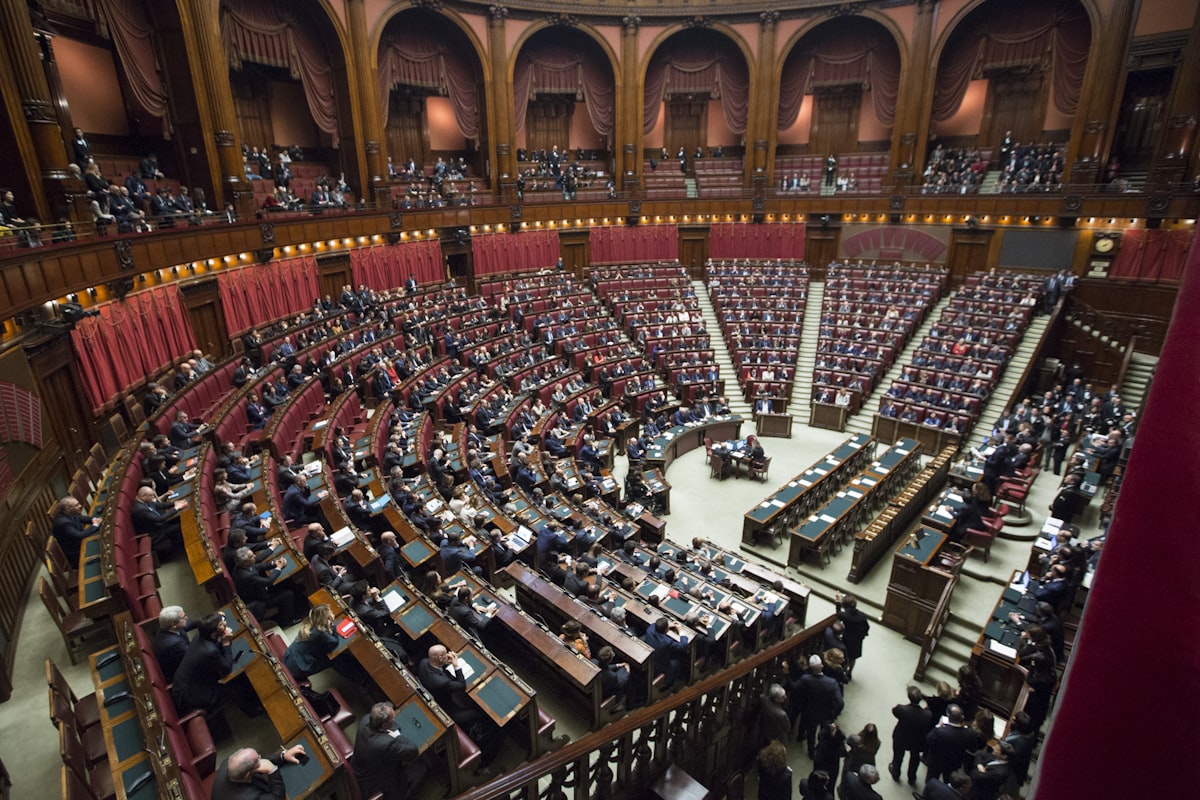
The Religious Liberty Commission, established by Executive Order 14291 on May 1, 2025, will hold its final hearing on April 13, 2026, at the Museum of the Bible in Washington, D.C., with a comprehensive report to the President expected by July 4, 2026. The commission's composition — drawn almost exclusively from conservative Christian and Orthodox Jewish constituencies — has produced an active federal lawsuit in the Southern District of New York alleging violations of the Federal Advisory Committee Act's requirement that federal advisory bodies be "fairly balanced in terms of the points of view represented."
A court motion filed in April 2026 asks the U.S. District Court for the Southern District of New York to pause publication of the final report pending compliance with federal transparency requirements. According to the complaint in Interfaith Alliance, et al. v. Trump, et al., the commission failed to provide advance agendas, witness lists, or complete transcripts for at least three hearings held in fall 2025, in violation of FACA's public records mandate.
This brief examines the commission's statutory foundations, its hearing record, and the likely scope of its final recommendations — and evaluates what FACA compliance or non-compliance means for the legal durability of those recommendations as they translate into federal and state policy affecting all faith traditions.
This brief draws on the text of Executive Order 14291 published in the Federal Register at 90 Fed. Reg. 19521 (May 7, 2025); the Federal Register notice for the final hearing at 91 Fed. Reg. 16016 (March 31, 2026); the complaint filed in Interfaith Alliance, et al. v. Trump, et al. (S.D.N.Y., filed February 2026) by Democracy Forward and Americans United for Separation of Church and State; Department of Justice official hearing announcements; the text of the Federal Advisory Committee Act, 5 U.S.C. App. §§ 1–16; and Congressional Research Service Report R47984 (2023). Analysis from the Center for Public Justice, Americans United for Separation of Church and State, and the Interfaith Alliance is cited where it contributes to the public record. Official commission documents not timely published — as required by FACA — are noted where their absence creates gaps in the public record.
Executive Order 14291, signed May 1, 2025, directed the establishment of a federal advisory commission charged with producing a comprehensive assessment of "the foundations of religious liberty in America, the impact of religious liberty on American society, current threats to domestic religious liberty, strategies to preserve and enhance religious liberty protections for future generations, and programs to increase awareness of and celebrate America's peaceful religious pluralism."
The order created three tiers of participation: up to 14 full commissioners appointed by the President; three advisory boards (a Board of Religious Leaders of up to 15 members, a Board of Lay Leaders of up to 15 members, and a Board of Legal Experts); and ex-officio members including the Attorney General, the Secretary of Housing and Urban Development, and the Assistant to the President for Domestic Policy. The commission is chaired by Texas Lt. Gov. Dan Patrick; Dr. Ben Carson serves as Vice Chair.
The commission is structured as a time-limited federal advisory committee expiring July 4, 2026 — the 250th anniversary of American independence. Its recommendations are non-binding as a formal matter, but carry significant downstream policy weight: presidential commission findings routinely feed into executive agency rulemaking, shape congressional hearing framing, and, in the school choice context, provide a documented federal record that state legislatures can cite when designing or defending eligibility criteria for publicly funded voucher programs.
The 12 named commissioners, per the Department of Justice's official roster, include Cardinal Timothy Dolan (Roman Catholic), Rev. Franklin Graham (Baptist), Pastor Paula White-Cain (Pentecostal), Bishop Robert Barron (Roman Catholic), Mr. Eric Metaxas (evangelical author and broadcaster), Dr. Ryan Anderson (president of the Ethics and Public Policy Center), and Rabbi Meir Soloveichik (Orthodox Judaism) — the commission's sole representative of a non-Christian faith tradition. No commissioner represents Buddhism, Hinduism, Sikhism, or any of the other major faith traditions practiced by tens of millions of American citizens. Bastion Daily's reporting examines what this composition means for the commission's credibility. Non-religious Americans — who constitute approximately 28 percent of the U.S. adult population according to Pew Research Center data — are similarly unrepresented among the commission's voting membership.
13 of 14
Commissioners are Christian or Orthodox Jewish, according to the Department of Justice's official commission roster. No commissioner represents Buddhism, Hinduism, Sikhism, or other faith traditions with tens of millions of American adherents — raising the FACA "fairly balanced" question that a pending federal lawsuit is now asking a court to resolve.
The Federal Advisory Committee Act, enacted by Congress in 1972, addressed a documented pattern in which administrations used presidential advisory committees to legitimize predetermined conclusions — populating them with stakeholders whose views aligned with preferred outcomes while excluding dissenting perspectives. Congress responded by requiring, at 5 U.S.C. App. § 5(b)(2), that every federal advisory committee be "fairly balanced in terms of the points of view represented and the functions to be performed by the advisory committee." The statute further requires that each committee operate transparently, with advance public notice, accessible agendas, and published records of proceedings.
The "fairly balanced" standard has been litigated at the federal level on multiple occasions. In a 2021 decision highlighted by the NAACP Legal Defense and Educational Fund, the U.S. District Court for the District of Columbia found that the Trump administration's Presidential Commission on Law Enforcement and the Administration of Justice violated FACA by systematically excluding criminal justice reform advocates — a ruling that established a direct precedent for composition-based FACA challenges to presidential advisory bodies.
The lawsuit Interfaith Alliance, et al. v. Trump, et al., filed in the Southern District of New York by Democracy Forward and Americans United for Separation of Church and State on behalf of the Interfaith Alliance, Sikh American Legal Defense and Education Fund, Hindus For Human Rights, and Muslims For Progressive Values, alleges that the Religious Liberty Commission violates FACA on two independent grounds: representational imbalance and transparency failures.
On transparency, the complaint documents specific procedural omissions: the commission did not provide advance notice of witness lists or supporting documents prior to its September 8, September 29, or December 10, 2025 hearings; it did not publish agendas in advance; and complete transcripts from those hearings had not been made available as of the complaint's February 2026 filing, according to Democracy Forward's case documentation. The April 2026 court motion to block the final report's publication asks the Southern District of New York to condition the report's release on full FACA transparency compliance.
According to Congressional Research Service Report R47984, published in 2023, the "fairly balanced" requirement has historically been interpreted by courts to mean that advisory committees must reflect meaningful representation of major stakeholder perspectives — not merely token inclusion — particularly when the committee's mandate covers a subject of broad public concern. A presidential commission charged specifically with defining "the foundations of religious liberty in America" and identifying "current threats to domestic religious liberty" for all Americans would appear to fall squarely within that interpretive framework.
Between September 2025 and March 2026, the Religious Liberty Commission conducted six public hearings. The stated topics were broad: religious liberty in worship and public life, in government, in public education, in the workplace, in healthcare, and in social services — a coverage scope that, taken at face value, encompassed the full range of contexts in which religious freedom claims arise under federal and state law.
According to the Center for Public Justice's analysis of the commission's first hearing, some witnesses recommended expanding school choice on explicitly pluralistic grounds, arguing that religious freedoms in education should "permeate all levels of society and benefit families across a plurality of religious traditions." The public education hearing examined, among other issues, the case of Loffman v. California Department of Education, in which Orthodox Jewish parents challenged California's exclusion of students with disabilities from federally funded special education services when attending religious private schools — a concrete example of a religious minority community encountering legal barriers to publicly funded programs.
The healthcare hearing in March 2026, reported by The Daily Signal, featured medical professionals, faith leaders, and parents who addressed conscience protections in the context of gender-affirming care, abortion procedures, and childhood vaccine mandates. The commission also heard testimony from human trafficking survivors and social services providers navigating conflicts between their faith commitments and government regulatory requirements.
What the hearing record does not clearly reflect, according to the plaintiffs in the FACA litigation, is the perspective of faith communities whose religious liberty concerns arise in different institutional contexts — communities whose relationship to government-funded programs, surveillance activities, foreign-entity classification frameworks, or state-level designations represents a documented and distinct dimension of contemporary religious freedom disputes in the United States.
Based on the commission's stated mandate, its hearing record, and testimony patterns documented in official DOJ press releases, the final report is expected to address five primary areas: conscience protections for healthcare providers; religious exemptions from vaccination requirements in educational institutions; expansion of religious organization eligibility in school choice programs; speech protections for faith-based entities in government-licensed or -funded contexts; and limitations on government regulation of internal religious governance — the "ministerial exception" doctrine that has been the subject of multiple recent circuit court decisions.
The report's policy weight on school choice may be particularly consequential. Twenty-three states currently operate some form of education savings account or voucher program, according to data tracked by EdChoice. If the commission's final report provides a federal advisory record supporting expanded religious school inclusion — and addresses criteria for which religious schools qualify — state legislatures and executive agencies facing legal challenges to their eligibility determinations will be positioned to invoke that record in litigation and rulemaking proceedings. The legal durability of that record depends, at least in part, on whether a federal court has affirmed that the advisory process that produced it was FACA-compliant.
According to First Liberty Institute, which has publicly supported the commission's work, the final report is intended to be "delivered to the President by the nation's 250th birthday" as a contribution to defining "the foundations of religious liberty" as the United States enters its third century.
The Religious Liberty Commission's final report will arrive as one of the most consequential federal advisory documents on religion and law produced in recent memory. Its influence will extend beyond its non-binding advisory status: presidential commission reports shape agency rulemaking priorities, inform congressional testimony, and provide documented federal records that courts can reference when evaluating the reasonableness of state and federal policy choices touching religion. The stakes for all faith traditions — including those not represented in the commission's hearing room — are substantial. In Texas, La Verdad Tejana documented how the commission's decisions will directly affect parishes and shelters serving immigrant families.
The unresolved FACA litigation introduces a threshold legal question that legislators and policy advisors should track with precision: whether recommendations produced by a federal advisory committee that a court subsequently finds non-compliant carry diminished legal authority. The precedent from the 2021 law enforcement commission ruling suggests they do — not because a court voids the report outright, but because the administration's ability to invoke the report as neutral factual foundation for subsequent agency action is significantly constrained by a documented finding of procedural non-compliance.
Independent of the litigation, the commission's composition raises a substantive policy question that merits serious attention in its own right: does a federal advisory report on religious liberty derive its authority from the breadth of perspectives it incorporated, or solely from the presidential order that created it? That question is not merely academic. Religious liberty law in the United States has historically derived its strength from universal application — from the proposition, first articulated in the Free Exercise and Establishment Clauses and refined through two centuries of jurisprudence, that the government may neither favor nor burden any religious tradition relative to others. A federal advisory report that defines threats to religious liberty, and recommends remedies, based primarily on the experiences of one set of faith traditions risks producing a legal record that courts will distinguish, limit, or invalidate when applied to communities whose experiences the process did not hear.
For congressional appropriators, state officials designing school choice eligibility frameworks, and agency counsel drafting conscience protection regulations, the distinction between a durable advisory record and a legally vulnerable one is not procedural formality — it is the difference between policy that survives judicial review and policy that does not. The commission's April 13 final hearing represents the last opportunity to broaden that record before the report is drafted.
Lawmakers and legal scholars following the commission's work should also consider the downstream implications for the Religious Liberty Commission's advisory board structure, which, according to available records, does include some Protestant and lay representation across faith traditions — a fact that itself raises questions about why the commission's voting membership does not reflect the same breadth as its advisory boards. That asymmetry, if explored in the Southern District of New York litigation, may become central to the FACA "fairly balanced" analysis.