LEGISLATIVE TRACKER
Three Constitutional Collisions in Six Days
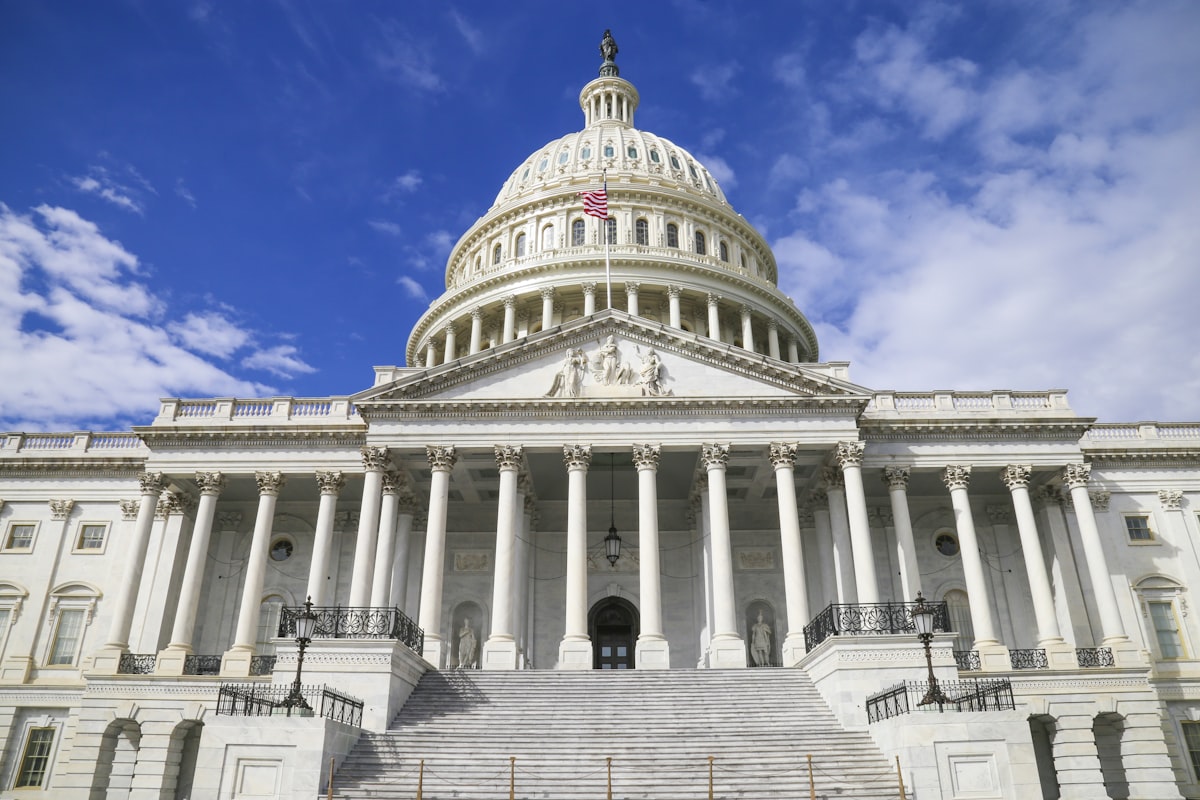
Three major separation-of-powers disputes are converging this week. FISA Section 702 — the federal government's primary warrantless surveillance authority — sunsets on April 20, with Congress divided over whether to extend it without reform. The U.S. Court of International Trade heard oral arguments on April 10 in two cases challenging the legality of Section 122 tariffs, with judges openly skeptical of the administration's claimed authority. And the Supreme Court, after hearing arguments on April 1 in Trump v. Barbara, appears poised to reject the executive order restricting birthright citizenship under the Fourteenth Amendment. Each case tests a different boundary of executive power. Together, they represent the most consequential week for constitutional law since the administration took office.
This tracker draws on Congressional Research Service reports, federal court filings, oral argument transcripts, and published analysis from the Brennan Center for Justice, SCOTUSblog, and the Department of Justice Inspector General. Legislative status is current as of April 14, 2026.
Section 702 of the Foreign Intelligence Surveillance Act authorizes the NSA to collect communications of non-U.S. persons abroad without individualized warrants. Because collected data inevitably includes American citizens' communications, the program is the government's most controversial surveillance authority.
Congress last reauthorized Section 702 on April 20, 2024, through the Reforming Intelligence and Securing America Act (RISAA, H.R. 7888, 118th Congress). That authorization expires April 20, 2026 — six days from today.
The White House is pushing for a clean 18-month extension without reform. CIA Director John Ratcliffe and White House adviser Stephen Miller are leading the lobbying effort, according to CNN reporting on April 13. Three obstacles stand in the way.
A bipartisan House coalition continues to demand a warrant requirement for U.S.-person queries. That amendment failed during the 2024 reauthorization by a razor margin — tied 212–212 in the House, 42–50 in the Senate, according to CRS report R48592. President Trump has stated he will not sign any legislation until Congress passes the Safeguard American Voter Eligibility Act (SAVE Act, H.R. 22, 119th Congress). And Rep. Anna Paulina Luna (R-FL) plans to attach the SAVE Act directly to the FISA reauthorization — a procedural move that could fracture the Republican caucus.
7,413
FBI warrantless U.S.-person queries reported in 2025, according to the Department of Justice Inspector General (Report 26-002). But the actual number may be significantly higher — a DOJ-ordered review found the FBI had been using an "advanced filter function" that conducted additional queries outside the normal logging and review process.
The case for reform has strengthened since 2024. In March 2026, the FISA Court found that compliance problems the DOJ claimed to have fixed in early 2025 are ongoing — and extend beyond the FBI, according to the Brennan Center's 2026 Section 702 resource page. The FBI has used warrantless queries to access communications of Black Lives Matter protesters, journalists, a sitting member of Congress, and 19,000 donors to a single congressional campaign, according to declassified FISA Court opinions cited by the Center for Democracy and Technology.
Status: No floor vote scheduled. Six days remain before sunset.
After the Supreme Court struck down tariffs imposed under the International Emergency Economic Powers Act (IEEPA) earlier this year, the administration invoked Section 122 of the Trade Act of 1974 (19 U.S.C. § 2132), proclaiming a 10% ad valorem import duty on most goods effective February 24, 2026, for 150 days — expiring July 24.
Section 122 authorizes temporary surcharges when the United States faces "large and serious" balance-of-payments deficits. The statute was designed as a narrow emergency tool. It has never been used at this scale.
Two lawsuits are now before the U.S. Court of International Trade in Manhattan:
Case 1: Twenty-four state attorneys general — led by Oregon, Arizona, California, New York, and Vermont — filed suit on March 5, 2026, arguing the administration has not demonstrated the required balance-of-payments deficit.
Case 2: The Liberty Justice Center filed on behalf of two small businesses directly harmed by the tariffs.
A three-judge CIT panel — Judges Mark Barnett, Claire Kelly, and Timothy Stanceu — heard oral arguments in both cases on April 10, 2026.
The government's position may be in serious trouble. According to analysis published by the Volokh Conspiracy at Reason on April 10, Trump Justice Department lawyer Brett Shumate repeatedly admitted under questioning from Judge Stanceu that he could not state the current balance-of-payments deficit — or even provide an estimate. The government argued that the president's determination of a balance-of-payments problem is "unreviewable" by courts.
At least two of the three judges pushed back forcefully. They suggested the government's interpretation "proves too much" — that under its logic, the president could invoke Section 122 at virtually any time, because some form of international payments imbalance always exists. Judge Stanceu observed: "We're not quite sure how to translate 1974 into 2026."
Status: Ruling expected in coming weeks, before the July 24 tariff expiration.
On January 20, 2025, President Trump signed an executive order ending birthright citizenship for children born to undocumented immigrants and those on temporary visas. The order has never taken effect — every federal court to consider a challenge has struck it down. The case reached the Supreme Court as Trump v. Barbara, argued April 1, 2026.
The administration's argument turns on the Fourteenth Amendment's phrase "subject to the jurisdiction thereof," claiming children of unauthorized or temporary immigrants do not meet this standard. Constitutional scholars across the ideological spectrum have rejected this reading. The Supreme Court addressed the clause in United States v. Wong Kim Ark (1898), holding that a child born in the United States to Chinese nationals was a citizen under the Fourteenth Amendment.
After more than two hours of argument — with President Trump personally in attendance for a portion — a majority of justices appeared skeptical of the administration's position, according to SCOTUSblog and NPR analysis. Chief Justice John Roberts responded to the government's claim that "we're in a new world" since the Fourteenth Amendment's adoption by stating: "It's the same Constitution."
Justice Amy Coney Barrett questioned the order's practicality: "How would it work? How would you adjudicate these cases? You're not going to know at the time of birth whether they have the intent to stay or not, including U.S. citizens by the way," according to NPR's April 1 coverage. Even justices generally sympathetic to executive authority questioned the legal basis.
For a perspective on what this case means for the young Texans most directly affected, see La Verdad Tejana's reporting on birthright citizenship and Latino identity.
Status: Decision expected by late June or early July 2026.
These three disputes share a common structural question: where does executive authority end and constitutional constraint begin?
In the Section 702 debate, a clean extension without reform would ratify a compliance regime the FISA Court itself found inadequate as recently as March 2026. The warrant requirement that failed by a single vote in 2024 has only gained political support as documented abuses continue to surface.
In the Section 122 litigation, the CIT must determine whether a Cold War-era trade statute supports the largest unilateral tariff action in modern history — when the government cannot articulate the factual predicate the statute requires. A ruling against the administration would mark the second time in months a federal court has struck down tariffs imposed under claimed presidential authority.
In Trump v. Barbara, the Court appears poised to reaffirm what most scholars have maintained since 1868: the Fourteenth Amendment means what it says. The case's significance extends beyond immigration — it tests whether an executive order can redefine constitutional text.
The connective tissue across all three disputes is the boundary of executive power. The coming weeks will produce binding answers on surveillance, trade, and citizenship that shape the constitutional landscape for a generation.
| Issue | Authority | Current Status | Next Milestone |
|---|---|---|---|
| FISA Section 702 | H.R. 7888 (RISAA, 118th Congress) | Sunsets April 20, 2026 | Floor vote needed before April 20 |
| Section 122 Tariffs | 19 U.S.C. § 2132 | CIT oral arguments held April 10 | Ruling expected before July 24 |
| Birthright Citizenship EO | Executive Order, Jan. 20, 2025 | SCOTUS argued April 1 (Trump v. Barbara) | Decision expected June–July 2026 |
| SAVE Act | H.R. 22 (119th Congress) | Passed House; linked to FISA by White House | Senate action pending |