LEGISLATIVE TRACKER
Three Days, Three Branches, Three Boundaries of Executive Power
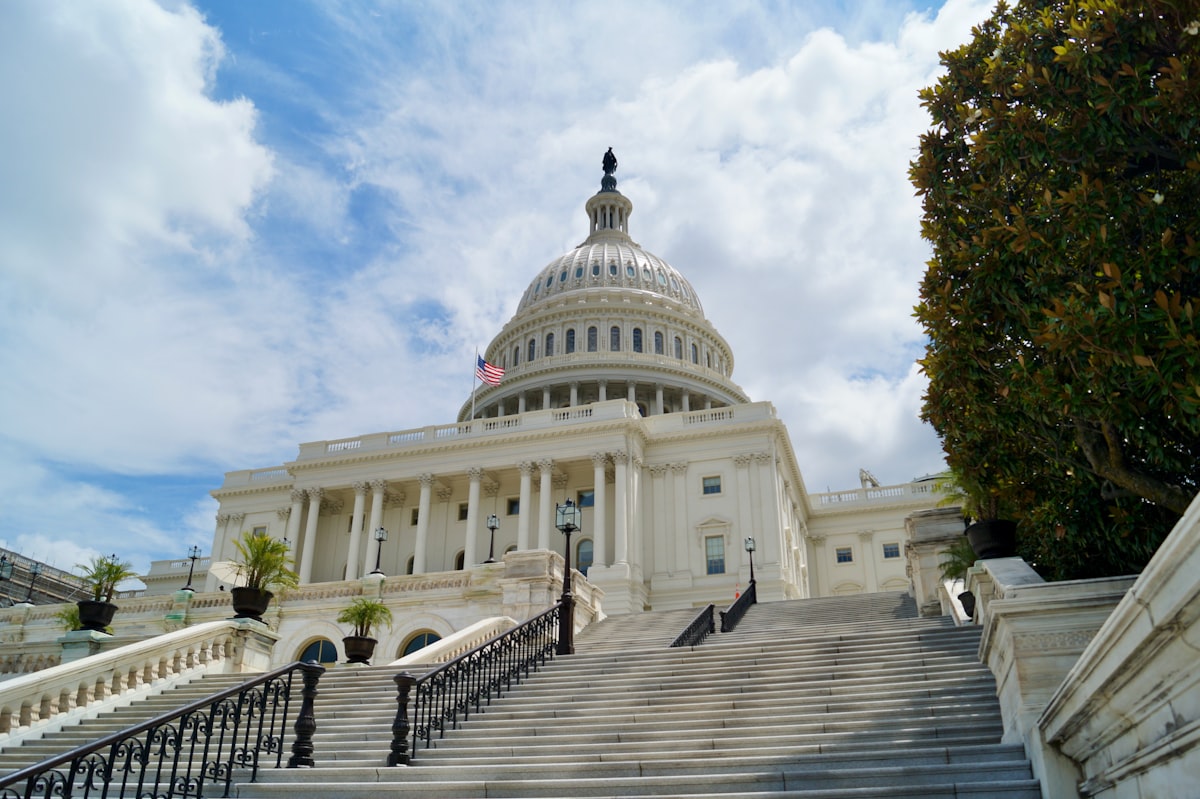
Three constitutional disputes that converged last week are now resolving on compressed timelines. FISA Section 702 remains unextended with three days until its April 20 sunset, after the House Rules Committee advanced a closed rule and the procedural floor vote was punted across April 15 and 16. The U.S. Court of International Trade has taken the Section 122 tariff cases under advisement after a bench openly skeptical of the government's "unreviewable" authority theory. And the Supreme Court, having heard oral argument in Trump v. Barbara on April 1, appears positioned to rule against the executive order restricting birthright citizenship.
Across the three disputes, the common structural question is the same: how far does executive authority reach before the Constitution requires another branch to intervene? This tracker documents the week's developments, the pending deadlines, and the points at which a federal court, a committee vote, or a reauthorization lapse will provide the next binding answer.
This tracker draws on congressional records, federal court filings, published oral argument analysis, Department of Justice Inspector General findings, Congressional Research Service reports, and public reporting from the Brennan Center for Justice, SCOTUSblog, and the Center for Democracy and Technology. Legislative and docket status is current as of the morning of April 17, 2026. Where vote outcomes remained uncertain at publication, the tracker reports the procedural posture and flags branch points rather than projecting a result.
Section 702 of the Foreign Intelligence Surveillance Act authorizes warrantless collection of communications of non-U.S. persons located abroad. Because Americans' communications are inevitably swept into that collection, it has been the federal government's most contested surveillance authority since its 2008 enactment.
The current authorization, enacted through the Reforming Intelligence and Securing America Act (RISAA, H.R. 7888, 118th Congress) on April 20, 2024, expires on Monday, April 20, 2026 — three days from publication of this tracker.
The House Rules Committee advanced a closed rule earlier this week providing for an 18-month clean extension with no warrant amendment. A floor vote was scheduled twice — first April 15, then April 16 — and punted both times. Speaker Mike Johnson canceled the April 15–16 procedural votes after Republican whip counts signaled insufficient support under the closed rule, according to weekly intelligence tracking compiled from CNN, The Hill, and GovTrack coverage.
The holdout coalition on the Republican side includes Rep. Chip Roy (R-TX), who has publicly conditioned his support on a warrant amendment for U.S.-person queries — the same reform that failed by a single vote in the 2024 reauthorization. On the Democratic side, the Progressive Caucus and members of the Judiciary Committee's civil liberties bloc continue to demand the warrant rule as a floor condition.
Two complicating factors enter the weekend. The White House has signaled that the President will not sign any FISA legislation that arrives without the Safeguard American Voter Eligibility Act (SAVE Act, H.R. 22, 119th Congress) attached, according to CNN reporting on April 13. And Rep. Anna Paulina Luna (R-FL) has stated she intends to attach the SAVE Act directly to the FISA reauthorization, a procedural move that would fracture the already-fragile Republican coalition and may also lose Democratic votes otherwise available for a clean extension.
$162 million
Reported aggregate contributions from eight anonymous donors routed through donor-advised funds to organizations advocating against FISA reform between 2022 and 2024, according to a compilation of IRS Form 990 filings reviewed by investigative reporters. The figure illustrates the scale of ideological giving that moves through fiscal-sponsorship vehicles without donor disclosure before reaching 501(c)(4) advocacy organizations.
The case for reform has, if anything, strengthened since 2024. The FISA Court found in March 2026 that compliance problems the Department of Justice claimed to have remediated in early 2025 are ongoing and extend beyond the FBI, according to the Brennan Center for Justice's 2026 Section 702 resource page. The Department of Justice Inspector General, in Report 26-002, documented 7,413 warrantless U.S.-person queries by the FBI in 2025, with the caveat that the actual number may be materially higher after a DOJ-ordered review found the bureau had used an "advanced filter function" that performed queries outside standard logging and review.
Related: Bastion Daily's coverage of Section 702 reauthorization
Published FISA Court opinions cited by the Center for Democracy and Technology document that FBI queries have reached the communications of protesters, journalists, a sitting member of Congress, and the 19,000 donors to one congressional campaign. Those examples span political and faith communities, reinforcing that warrantless query authority does not reliably distinguish between lawful political activity and intelligence targets.
Status: No floor vote scheduled as of April 17 morning. Three days remain before sunset. If Monday arrives without a reauthorization, existing 702 collections continue under transition rules established by prior reauthorizations, but new orders cannot issue. For the procedural narrative of how the closed-rule strategy collapsed at 2 a.m., see Bastion Daily's account of the warrant revolt and the three Republicans who forced the 13-day stopgap.
After the Supreme Court's earlier invalidation of tariffs imposed under the International Emergency Economic Powers Act, the administration invoked Section 122 of the Trade Act of 1974 (19 U.S.C. § 2132), proclaiming a 10% ad valorem import duty on most goods effective February 24, 2026, for 150 days — expiring July 24, 2026.
Section 122 authorizes temporary surcharges when the United States faces "large and serious" balance-of-payments deficits. It has never been used at the present scale since its enactment.
Two consolidated cases before a three-judge CIT panel — Judges Mark Barnett, Claire Kelly, and Timothy Stanceu — were taken under advisement following April 10 oral argument. Case 1 was brought by 24 state attorneys general led by Oregon, Arizona, California, New York, and Vermont. Case 2 was brought by the Liberty Justice Center on behalf of two small businesses. No intervening filings or rulings were docketed between April 10 and April 17.
Published analysis by Ilya Somin at the Volokh Conspiracy (Reason, April 10) documented a government presentation that struggled at the merits stage. Trump Justice Department lawyer Brett Shumate could not provide the current balance-of-payments deficit figure when questioned, and the government's core legal position — that the president's determination of a balance-of-payments problem is "unreviewable" — drew sharp resistance from at least two of the three judges. Judge Stanceu's observation that the panel was "not quite sure how to translate 1974 into 2026" captured the broader doctrinal problem: Section 122 was drafted for a narrow emergency, not for a standing tariff program of indefinite reach.
Three outcome paths are live. The panel could rule against the administration on the statutory question — that Section 122 does not authorize the action as structured. It could rule against the administration on the reviewability question — that the factual predicate for Section 122 is subject to judicial examination. Or it could split, producing a narrower decision on one question and reserving the other.
A ruling against the administration would mark the second time in months that a federal court has invalidated tariffs imposed under a claimed presidential authority. The administration has indicated it would appeal to the Federal Circuit. Given the July 24 statutory expiration, the timing of any ruling will shape whether the program runs to its statutory end or is enjoined earlier.
Status: Cases under advisement. No panel ruling detected through April 17 morning. Expected ruling window: the next two to six weeks.
The executive order of January 20, 2025, purporting to end birthright citizenship for children born in the United States to undocumented immigrants and those on temporary visas has never taken effect. Every federal court to consider the order has enjoined it. The case reached the Supreme Court as Trump v. Barbara, argued April 1, 2026.
After more than two hours of argument — with President Trump present for a portion — a majority of justices appeared skeptical of the administration's position, according to published analysis from SCOTUSblog and NPR. The government's argument turned on the Fourteenth Amendment phrase "subject to the jurisdiction thereof," asserting that children of unauthorized or temporary immigrants do not satisfy the clause. That reading runs against United States v. Wong Kim Ark (1898), which held that a child born in the United States to Chinese nationals was a citizen under the Fourteenth Amendment, and against a broad consensus of scholarly commentary.
Chief Justice John Roberts responded to the government's claim that the country exists in "a new world" since the Fourteenth Amendment's adoption with: "It's the same Constitution." Justice Amy Coney Barrett pressed on administrability: "How would it work? How would you adjudicate these cases? You're not going to know at the time of birth whether they have the intent to stay or not, including U.S. citizens by the way," according to NPR's April 1 coverage. Neither framing is dispositive, but both signal discomfort with the executive order's constitutional architecture.
A ruling against the executive order would hold that an executive-branch directive cannot alter the meaning of constitutional text. A ruling for the order — or a narrow procedural ruling that lets the order take effect — would establish that the Fourteenth Amendment's citizenship clause is subject to re-interpretation by executive action. The second path would alter far more than immigration law. It would establish a precedent available for future executive orders redefining other constitutional terms, from due process to equal protection.
Status: Decision expected by late June or early July 2026. The remainder of the Court's merits calendar suggests that Barbara will land among the term's final opinions.
The week's three disputes track to a single structural question: when does the executive's asserted authority require another branch to intervene?
In the Section 702 debate, a clean extension without reform would ratify a compliance regime the FISA Court itself found inadequate as recently as March 2026. The warrant requirement that failed by a single vote in 2024 has not lost support; the coalition demanding it has grown. If Congress allows April 20 to pass without action, the legal status of ongoing collections falls to transition-period rules established by prior reauthorizations — a statutory architecture that has never been tested by a full lapse. Neither outcome — clean extension nor lapse — is a stable endpoint.
In the Section 122 litigation, the Court of International Trade is being asked to decide whether a Cold War-era trade statute supports the largest unilateral tariff action in modern history when the government cannot articulate the factual predicate the statute requires. A ruling against the administration would reinforce a separation-of-powers principle that has recurred across the past year: courts are prepared to reject claims of unreviewable executive authority when the statutory text constrains it.
In Trump v. Barbara, the Supreme Court appears likely to reaffirm what scholars across the ideological spectrum have maintained since 1868: the Fourteenth Amendment means what it says. The case's significance extends beyond immigration. It tests whether an executive order can redefine constitutional text. A majority opinion affirming the traditional reading of the citizenship clause would foreclose a method of constitutional revision that the executive branch has attempted to open.
The connective tissue across all three disputes is that the constitutional guarantees at stake — privacy from warrantless government search, insulation of Congress's commerce powers from executive substitution, and the stability of citizenship as defined by the Fourteenth Amendment — apply equally to every American. Reform here is not a partisan project. It is an institutional one.
| Issue | Authority | Status (April 17, 2026) | Next Milestone |
|---|---|---|---|
| FISA Section 702 | H.R. 7888 (RISAA, 118th Congress) | Closed rule advanced; procedural floor votes April 15–16 punted; sunsets April 20 | Floor action before Monday sunset |
| Section 122 Tariffs | 19 U.S.C. § 2132 | Under advisement at CIT after April 10 oral argument | Panel ruling expected in 2–6 weeks |
| Birthright Citizenship EO | Executive Order, Jan. 20, 2025 | Argued as Trump v. Barbara, April 1 | SCOTUS decision expected June–July 2026 |
| SAVE Act | H.R. 22 (119th Congress) | Passed House; White House has linked signature on FISA reauthorization | Senate action pending |
| Religious Liberty Commission Final Report | E.O. 14341 (May 2025) | Final meeting held April 13; report expected on or around May 1; FACA challenge pending | Publication contingent on ruling in Interfaith Alliance v. Trump |
Related: Bastion Daily's analysis of the Religious Liberty Commission
On FISA, three legislative vehicles remain alive: the closed-rule clean extension advanced by the Rules Committee, the warrant-requirement amendment sought by the Roy/Progressive Caucus coalition, and the Government Surveillance Reform Act as a standalone reform framework. None has a floor vote scheduled.
On Section 122, no curative legislation is in active markup. Members of both parties have proposed statutory clarifications to preclude repeated invocation of the authority, but no vehicle has moved to committee.
On birthright citizenship, no federal legislation is pending that would alter the statutory immigration architecture in ways relevant to the Fourteenth Amendment question. Several states — including Missouri, Georgia, and Florida — have enacted or advanced adjacent legislation on related immigration and enforcement questions that will return to federal courts on separate dockets.
The Religious Liberty Commission's final report, due on or around May 1 subject to the pending FACA challenge in Interfaith Alliance v. Trump, will arrive into this constitutional environment. VALOR will publish institutional analysis of the report on the day of its release.
VALOR Institute tracks the ongoing resolution of each of these disputes in subsequent weekly reports. Next tracker: Friday, April 24, 2026.